En una cuadrícula de MxN cuadraditos si trazamos la diagonal que va desde el origen O(0,0) hasta el punto P(M,N) esta recta atraviesa
un total de M+N-m.c.d.(M,N) puntos interiores.
Mostrando entradas con la etiqueta Recreativas. Mostrar todas las entradas
Mostrando entradas con la etiqueta Recreativas. Mostrar todas las entradas
jueves, 26 de abril de 2007


miércoles, 25 de abril de 2007
Angulos de un triángulo
¿Y que pasa con los ángulos de un triángulo?Aquí hay demostración animada
http://w3.cnice.mec.es/eos/MaterialesEducativos/mem2002/geometria_triangulo/contenido.htm
http://w3.cnice.mec.es/eos/MaterialesEducativos/mem2002/geometria_triangulo/contenido.htm
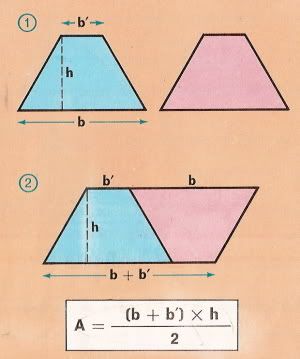
Area del trapecio AM-GM
No me interesa de aquí el area en sí sino la demostración tan elegante
http://i113.photobucket.com/albums/n205/leonsotelo/Areatrapecio.jpg
http://jwilson.coe.uga.edu/emt725/Isos.Trpzd/Diag/diag.html
http://jwilson.coe.uga.edu/emt725/Class/Lanier/ISOSTRAP/isotrap.html
http://www.artofproblemsolving.com/Forum/viewtopic.php?t=145287
http://www.artofproblemsolving.com/Wiki/index.php/Root-square-mean_arithmetic-mean_geometric-mean_harmonic-mean_inequality
http://i113.photobucket.com/albums/n205/leonsotelo/Areatrapecio.jpg
http://jwilson.coe.uga.edu/emt725/Isos.Trpzd/Diag/diag.html
http://jwilson.coe.uga.edu/emt725/Class/Lanier/ISOSTRAP/isotrap.html
http://www.artofproblemsolving.com/Forum/viewtopic.php?t=145287
http://www.artofproblemsolving.com/Wiki/index.php/Root-square-mean_arithmetic-mean_geometric-mean_harmonic-mean_inequality
martes, 24 de abril de 2007
Sody.Kissing Circles
From a smooth 30-inch-diameter circular plywood disk, two smaller circular disks
of diameters 20" and 10" are cut. What is the largest circular disk that can be cut
from one (either) piece of the remaining plywood?
Descartes' Kissing Circles Formula says for curvatures a, b, c, d (= reciprocals of the radii), there is a "close relatonship"
. . (a^2 + b^2 + c^2 + d^2) = (1/2)(a + b + c + d)^2. .The curvature is negative if you're inside the circle.
Descartes' formula comes from 1638; Fredrick Soddy's poem about it came 293 years later
With this relation in mind, it's a simple enough matter to plug in the known and find the unknown:
Known radii : 5 , 10 , and -15 (neg sign for concave big circle), Unknown radius : r.
Curvatures : 1/5 , 1/10 , -1/15 , a = 1/r. Formula of Descartes:
[(1/5)^2 + (1/10)^2 + (-1/15)^2 + a^2] = (1/2)[(1/5 + 1/10 - 1/15 + a)^2]
(1/25 + 1/100 + 1/225 + a^2) = (1/2)(1/5 + 1/10 - 1/15 + a)^2 . . mult both sides by 900 = 30^2:
36 + 9 + 4 + 900 a^2 = (1/2)(6 + 3 - 2 + 30a)^2 ==> 2(49 + 900 a^2) = (7 + 30a)^2 ==>
98 + 1800 a^2 = 49 + 420 a + 900 a^2 ==> 900 a^2 - 420 a + 49 = 0 ==> (30 a - 7)^2 = 0
So a = 7/30 giving r = 30/7 ; the diameter of the circular disk is d = 60/7 = 8 4/7 inches.
The double root means the two circles are the same size, normally there's a 'big' and 'small' solution
León-Sotelo
of diameters 20" and 10" are cut. What is the largest circular disk that can be cut
from one (either) piece of the remaining plywood?
Descartes' Kissing Circles Formula says for curvatures a, b, c, d (= reciprocals of the radii), there is a "close relatonship"
. . (a^2 + b^2 + c^2 + d^2) = (1/2)(a + b + c + d)^2. .The curvature is negative if you're inside the circle.
Descartes' formula comes from 1638; Fredrick Soddy's poem about it came 293 years later
With this relation in mind, it's a simple enough matter to plug in the known and find the unknown:
Known radii : 5 , 10 , and -15 (neg sign for concave big circle), Unknown radius : r.
Curvatures : 1/5 , 1/10 , -1/15 , a = 1/r. Formula of Descartes:
[(1/5)^2 + (1/10)^2 + (-1/15)^2 + a^2] = (1/2)[(1/5 + 1/10 - 1/15 + a)^2]
(1/25 + 1/100 + 1/225 + a^2) = (1/2)(1/5 + 1/10 - 1/15 + a)^2 . . mult both sides by 900 = 30^2:
36 + 9 + 4 + 900 a^2 = (1/2)(6 + 3 - 2 + 30a)^2 ==> 2(49 + 900 a^2) = (7 + 30a)^2 ==>
98 + 1800 a^2 = 49 + 420 a + 900 a^2 ==> 900 a^2 - 420 a + 49 = 0 ==> (30 a - 7)^2 = 0
So a = 7/30 giving r = 30/7 ; the diameter of the circular disk is d = 60/7 = 8 4/7 inches.
The double root means the two circles are the same size, normally there's a 'big' and 'small' solution
León-Sotelo
Suscribirse a:
Entradas (Atom)